
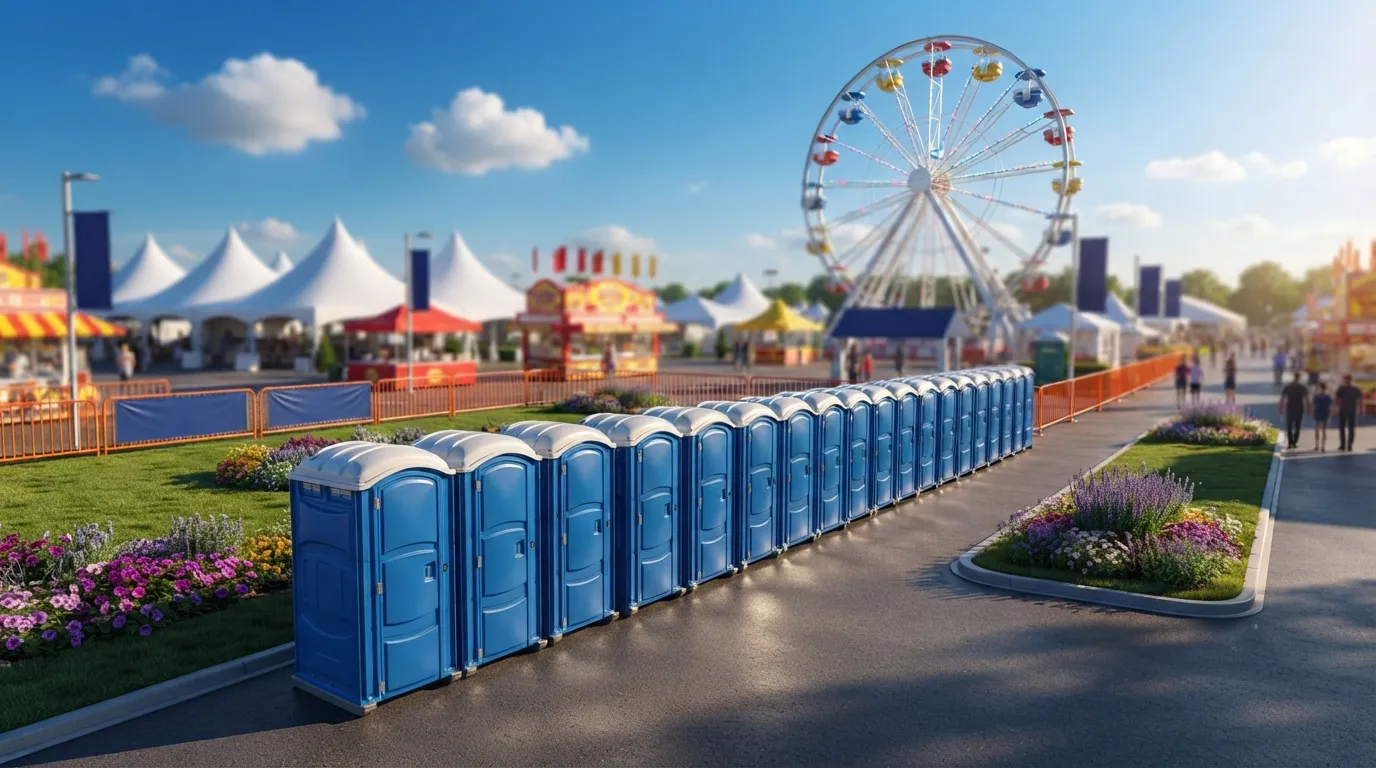
How many restrooms does a county fair need?
Start with your peak-hour attendance, not your total daily count, because that is when lines form. A fair drawing 3,000 people through a gate on a Saturday behaves very differently than the same 3,000 spread across a slow Tuesday, and our placement guide walks through both cases. Most fair organizers in Rancho Cucamonga land somewhere between 15 and 40 standard units, depending on midway size, grandstand seating and food court layout. ADA Standards section 213.2 requires that at least 5 percent of any cluster of single-user units be accessible, with a minimum of one, so a 20-unit bank needs at least one ADA accessible porta potty. Grandstands and beer gardens draw longer waits, so cluster extra units there rather than spreading everything evenly across the fairgrounds. If your fair runs a full week rather than a weekend, ask about monthly porta potty rental rates instead of paying day rates for ten straight days. For vendors running food booths, a handwashing station rental near every prep area keeps health inspectors satisfied and lines moving. We also place temporary fence rental sections around restroom banks when crowd flow gets tight near main stages, and light towers matter once evening entertainment runs past dusk; see light tower rental for that piece.
What restroom options work best for a multi-day fair?
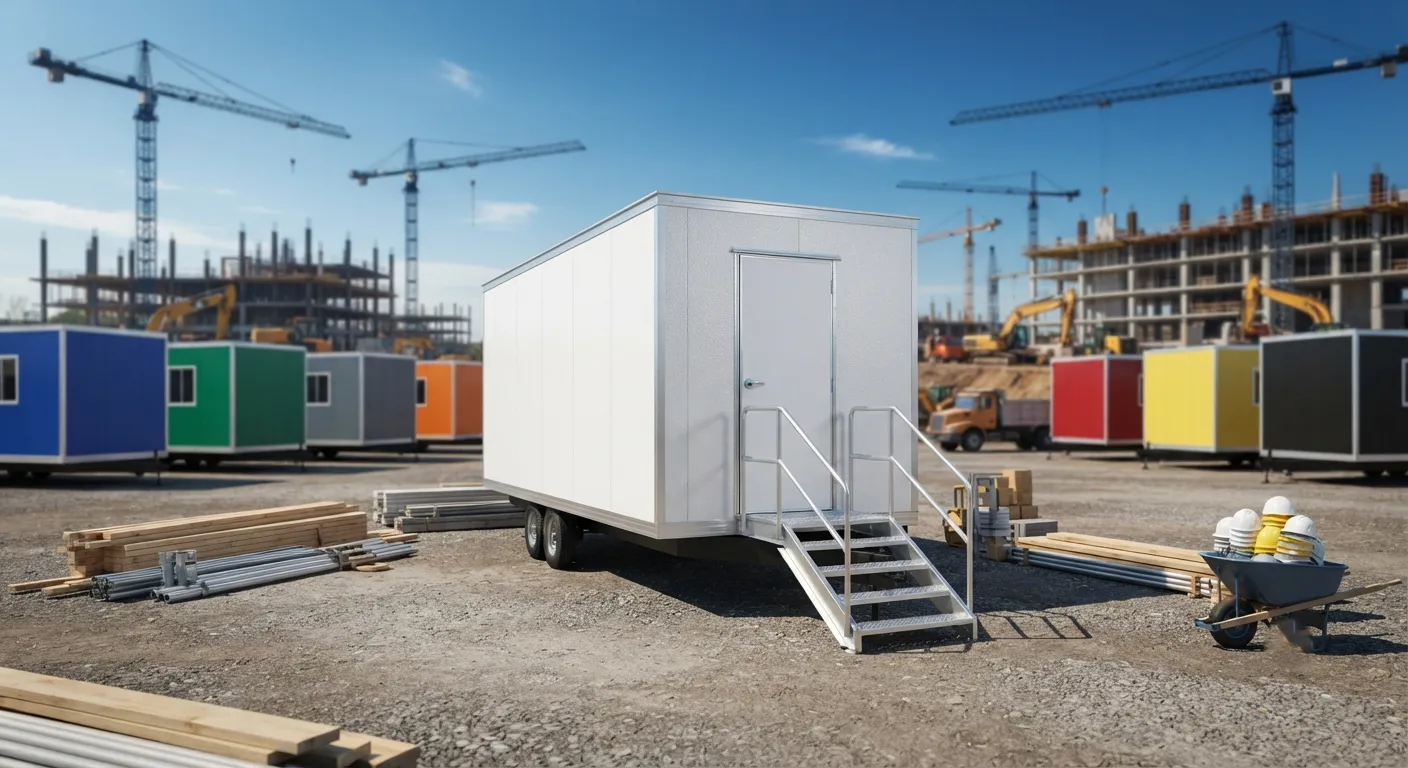
Standard units handle midway traffic fine, but a fair with a ticketed grandstand or VIP area usually wants something nicer. A restroom trailer rental with flushing fixtures and running water reads better next to a beer garden or sponsor tent than a bank of standard units. For fairs expecting 500 to 1,500 guests in a VIP zone, a 4 stall restroom trailer usually covers it; bigger fairs with grandstand seating for thousands often step up to an 8 stall restroom trailer. Deluxe flushable units split the difference in price and comfort for general admission areas, and you can compare specs on the deluxe flushable porta potty page. Whatever mix you choose, OSHA 1926.51(c)(1) sets the sanitation ratio for any workers your fair employs onsite, from ticket staff to ride operators, separate from guest-facing units. A 60 to 70 gallon holding tank on a standard unit covers roughly the ANSI/PSAI Z4.3 baseline of one service visit per week for 10 users over a 40 hour week, but fair crowds burn through that fast, so daily servicing during the run is standard practice, not an upsell.
| unit | day | week | event |
|---|---|---|---|
| standard | $100 - $350 | $130 - $500 | $200 - $800 |
| ada | $200 - $400 | $200 - $400 | -- |
| deluxe | $85 - $1,200 | $150 - $290 | -- |
| trailer | $175 - $2,500 | $1,650 - $1,650 | $2,499 - $3,899 |
Event-rate trailer pricing reflects full setup, servicing and teardown across a multi-day run rather than a flat daily rate, which is why it sits above the simple day-times-length math. For general county fair budgeting alongside dumpsters and fencing, our event restroom rental page breaks down what typically gets bundled together.
Where should restrooms go on a fairgrounds layout?
Put them at the intersections people already walk through: near the midway entrance, by the grandstand exits, and adjacent to the food court, not tucked behind a barn where nobody looks. ADA Standards section 403.5.1 requires a minimum 36 inch clear route to any accessible unit, and section 405.2 caps ramp slope at 1:12, so avoid placing ADA units on uneven turf or gravel that would force a steeper approach. A 60 foot straight clearance is needed behind any roll-off delivery, which matters if your fair also brings in a roll-off dumpster rental for vendor waste and wants both trucks on site the same morning. Keep restroom banks away from generator exhaust and food prep lines, and route power for a restroom trailer through a dedicated circuit rather than sharing a cord run with a fryer station. Rancho Cucamonga fairgrounds layouts vary by lot, so a walkthrough before your event date catches conflicts a floor plan misses. Fairs in neighboring cities follow similar logic: organizers 8.3 miles west in Upland and 10.7 miles west in Claremont typically request the same midway-plus-grandstand cluster pattern we build here. If your fair also needs waste containers for vendor booths, pair restroom placement with a 10 yard dumpster rental or larger unit sited along the same service road for one combined pickup route.
How far in advance should we book fair restrooms?
Book as soon as your fairgrounds contract is signed, ideally 60 to 90 days out for multi-day fairs. Trailer units and ADA-compliant clusters book first during fair season. Late requests still get handled, but selection narrows fast once nearby festivals and fairs claim the same inventory.
Do we need ADA-accessible units even for a small fair?
Yes. ADA Standards section 213.2 requires at least one accessible unit in any cluster of single-user toilets, regardless of overall fair size. A one-day church fair with six units still needs one ADA unit.
Can restrooms handle a multi-week county fair run?
Yes, with a servicing schedule built for it. Longer fairs often shift from event-day pricing to porta potty rental per day or monthly terms, and servicing frequency increases well past the ANSI/PSAI Z4.3 weekly baseline once daily crowds are heavy.
What about handwashing for food vendors?
Every food booth needs a dedicated handwashing station, not just hand sanitizer. 29 CFR 1910.141(d)(2) requires soap and towels or a hand-drying device at washing facilities; sanitizer alone does not satisfy it. We place units directly at booth rows.
How much does a full restroom package cost for a weekend fair?
It depends on unit mix and trailer count, but most Rancho Cucamonga weekend fairs land inside standard event-rate bands. Check porta potty rental cost for full ranges, or request a quote built around your actual layout.
Next step
Get a delivery date
Tell us the address, the dates and the headcount. We size the order and confirm the route.