
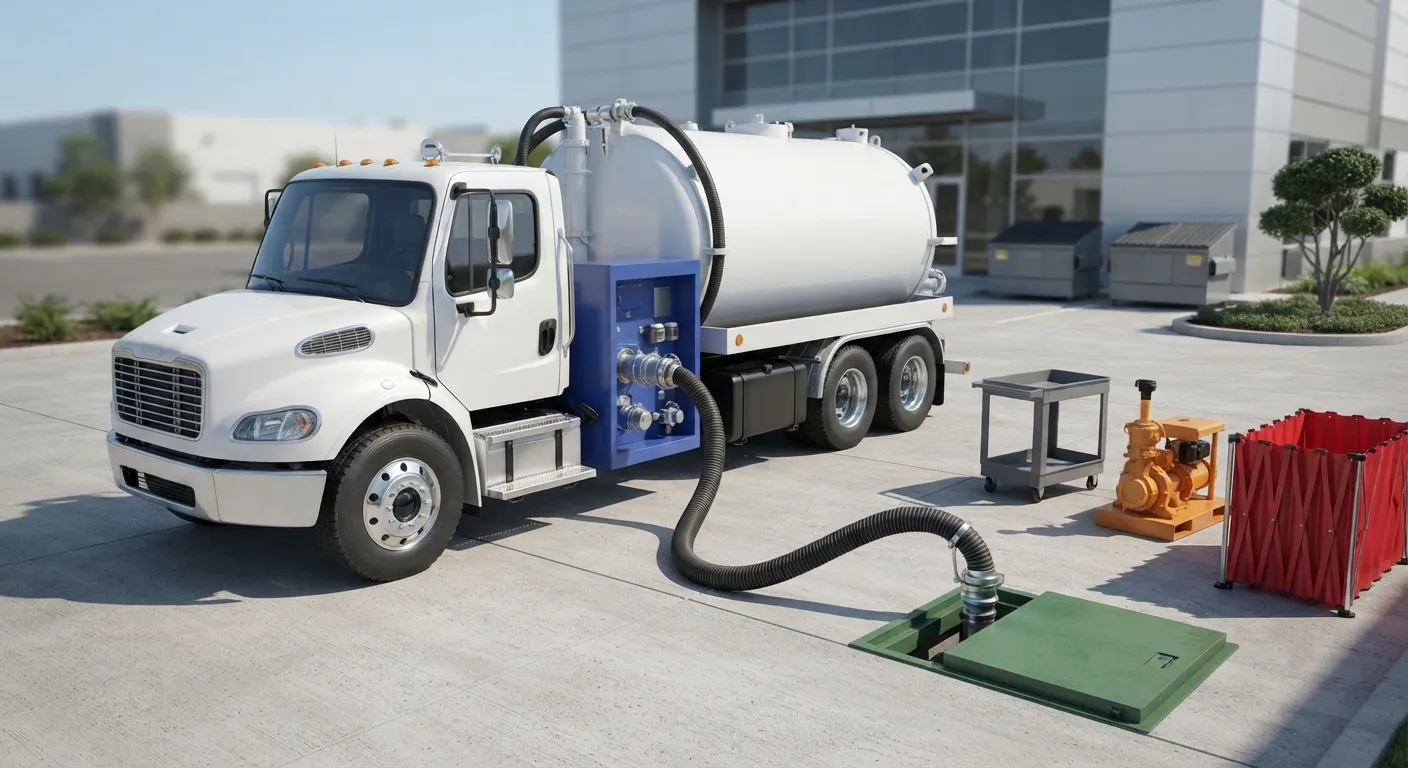
How often does a grease trap need pumping?
The 25 percent rule is the trigger, not the calendar. A high-volume kitchen near a busy corridor in Rancho Cucamonga might hit that mark in three weeks. A slower operation might stretch past two months, closer to the interval outlined in our how often to pump a septic tank guide. Waiting too long backs up drains and can force an emergency septic service call at a worse hour than you'd like. We check fill levels on a rotating schedule and adjust the interval as your kitchen's output changes, so you're not paying for pumps you don't need or risking a boil-over you didn't see coming, and the same crew can flag septic tank warning signs while they're on-site. This is different math than a residential septic tank pumping cost conversation, since interceptors work off contamination percentage, not years. If you're not sure where your kitchen falls, our septic pumping service team can measure it on the first visit and set a baseline, and a holding tank rental can bridge the gap if your interceptor needs to come offline. Commercial grease trap pumping is routine work once the interval is dialed in, and most accounts settle into a predictable rhythm within two service cycles.
What does grease trap pumping cost in Rancho Cucamonga?
Pricing depends on tank size, access, and how far the truck has to travel from your kitchen door, similar factors to what we walk through on our porta potty rental cost page for other site services. A septic-class pump-out in the standard price band runs day-rate pricing similar to other liquid waste service, and emergency or after-hours calls carry a premium over a scheduled visit. Kitchens near Upland, 8.3 miles west, or Jurupa Valley, 13.2 miles southeast, fall inside our normal service radius without an added trip charge.
| service type | day | weekend |
|---|---|---|
| standard septic/grease pump | $150 - $300 | $199 - $300 |
| service call fee | $100 - $175 | $400 - $700 |
Weekend and emergency grease trap pumping carries a higher rate because it pulls a crew off a scheduled route. If your interceptor is close to overflowing, ask about emergency septic service instead of waiting for the next open slot. For a full cost breakdown by tank size, see septic tank pumping cost.
Why does grease trap pumping matter for a commercial kitchen?
A neglected interceptor doesn't just smell bad, and the same crew handling your construction site services can add sanitation coverage if your property is mid-renovation. It backs up floor drains, slows dishwashing, and can shut down service during a lunch rush. Grease trap pumping service keeps fats and solids below the 25 percent threshold so the interceptor keeps doing its job between visits. Kitchens that skip inspections often find out the hard way, usually during a busy weekend, that a scheduled visit would have cost less than an emergency one. We also handle related sanitation needs on the same visit if you're running a temporary kitchen or event setup, including portable restroom rental, portable sink rental, and handwashing station rental for staff. Restaurants operating under 29 CFR 1910.141(d)(2) already provide soap and towels for employee handwashing, and a working grease trap keeps that whole back-of-house system from backing up into the kitchen. If your property also runs a septic system alongside the interceptor, our crew can service both in one stop, which saves a second dispatch fee across Rancho Cucamonga, and we can bring a roll-off dumpster rental or temporary fence rental along if the kitchen is under construction.
Commercial accounts near Claremont, 10.7 miles west, and Montclair, 14.0 miles southwest, are on our regular route, so grease trap pumping near me searches from those areas land inside our normal coverage, along with our full service areas list. For general questions about our full service list, visit our about page or request a quote directly.
How do I know if my grease trap is full?
Slow drains, a sour smell near the kitchen floor drain, or grease backing up into the sink are the usual signs. The 25 percent fats-oils-grease-and-solids threshold is the technical trigger. If you notice any of those signs, call for service rather than waiting for the next scheduled date.
Can I schedule emergency grease trap pumping?
Yes. We run emergency and weekend calls when an interceptor overflows or a kitchen has to reopen fast. Weekend service carries a higher rate than a scheduled weekday pump, so booking ahead when you can see the fill level rising saves money.
Do restaurants need grease trap pumping year-round?
Yes, output doesn't stop with the seasons. Busy kitchens near event venues or holiday rushes often need shorter intervals during peak months. We track fill rate per account and flag when a kitchen's schedule needs tightening.
What size grease trap does my kitchen need?
That depends on cooking volume and plumbing layout, which our crew can assess on-site, much like the sizing questions covered in our how many porta potties do I need guide for restroom counts. For septic-adjacent systems, see how often to pump a septic tank for related sizing context on holding capacity.
Is grease trap pumping different from septic tank pumping?
Yes. Grease traps are measured by contamination percentage, not years, while a typical residential septic tank is pumped every 3 to 5 years. Commercial kitchens usually need both services tracked separately. See septic tank cleaning for tank-side maintenance.
Next step
Get a delivery date
Tell us the address, the dates and the headcount. We size the order and confirm the route.