
How many restrooms does a film crew need?
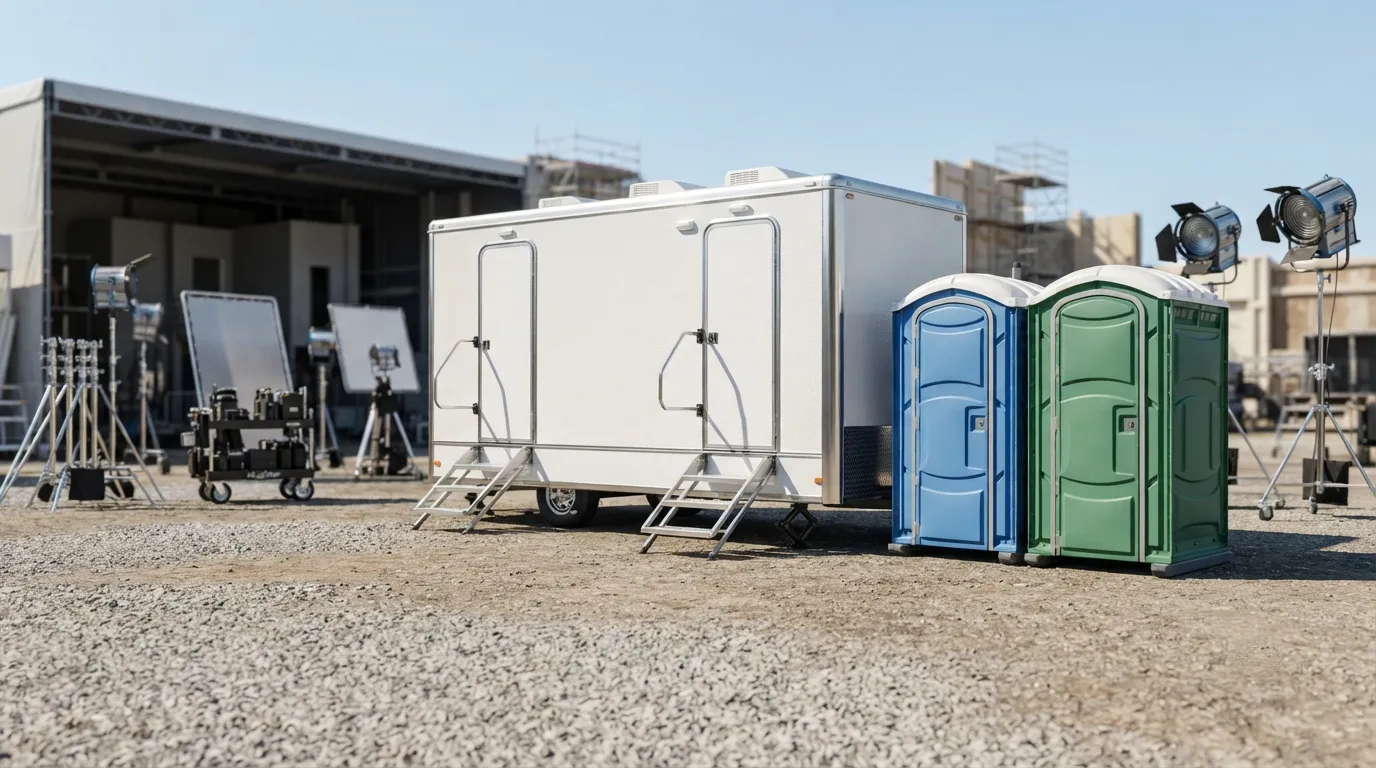
Crew size drives the count, and OSHA 1926.51(c) sets the baseline: one toilet for 20 workers or fewer, then one toilet and one urinal per 40 workers as headcount climbs past that. A background-heavy day in Rancho Cucamonga can push a 60 person crew over that first threshold fast, so producers usually add a second or third unit before lunch, not after. Locations scattered around a lot or a warehouse district benefit from spacing units by department rather than clustering them at basecamp, which cuts walk time for grips and electric. For a location shoot with holding areas, background staging, and a crafty tent, run the numbers through how many porta potties do I need before the truck order goes out. Talent trailers and honeywagons typically pair with a 4 stall restroom trailer or an 8 stall restroom trailer depending on cast size, while background and crew often get standard units or a 2 stall restroom trailer near base. ADA Standards section 213.2 requires at least one accessible unit in any cluster of portable toilets, and never fewer than one even for a small cluster, so productions with mobility-limited cast or crew should book an ADA accessible porta potty alongside the standard run. Multi-day shoots at the same base location often step up to monthly porta potty rental pricing instead of paying day rates each call.
What restroom options work best for film production?
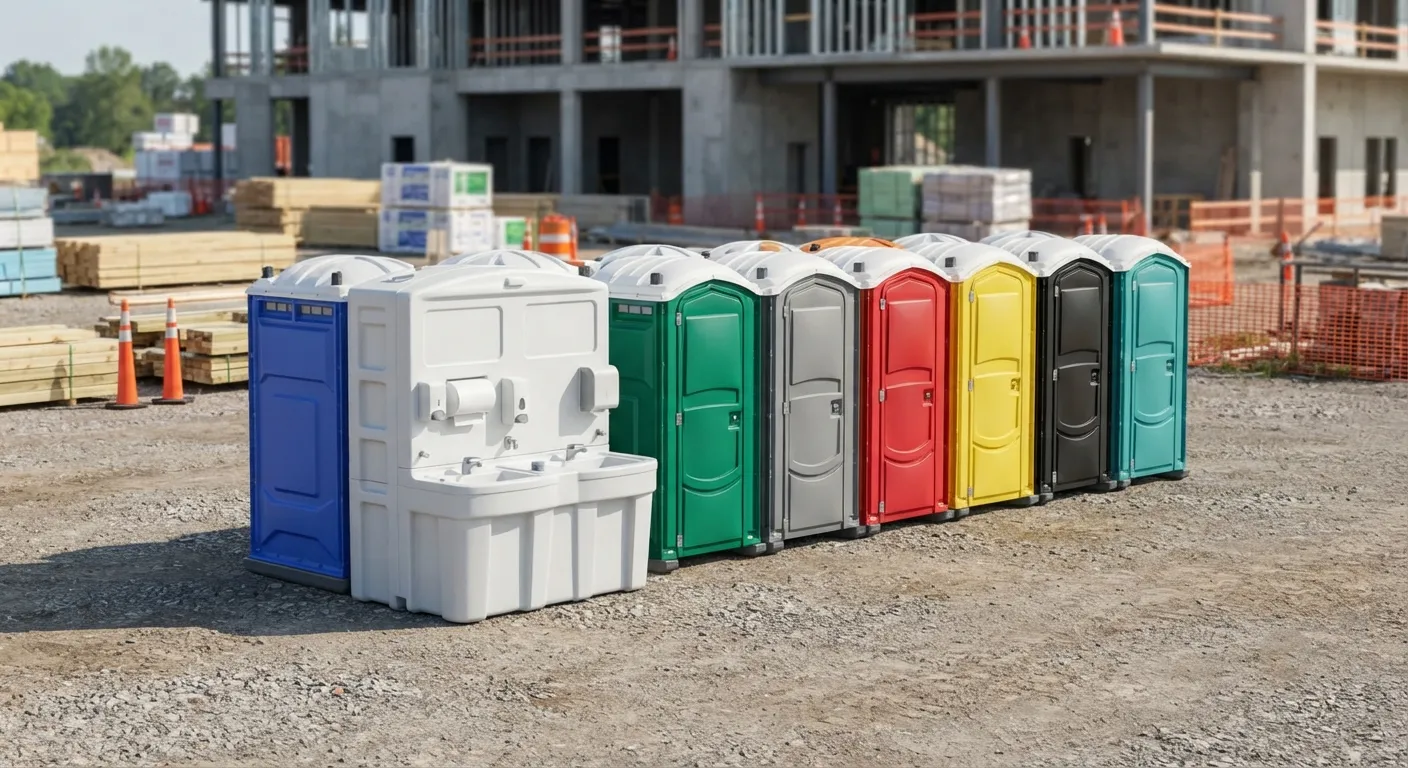
Most productions mix unit types by role. Background and crew get standard units or a deluxe flushable porta potty when the location has a longer shoot day, cast and producers get trailer comfort, and any wash-heavy department gets its own sink. A restroom trailer rental with climate control and real fixtures reads better to talent than a standard unit, and a shower trailer rental earns its keep on multi-day location shoots or stunt-heavy days where crew needs to clean up between setups. Makeup, hair, and any department running solvents, aerosols, or paint should have wash stations nearby: 29 CFR 1910.141(d)(2) requires soap and towels or a hand-drying device at washing facilities, and hand sanitizer alone does not satisfy it. If the art department is spraying coatings or using solvent-based paints on set dressing, OSHA 1926.51(f)(1) requires washing facilities for that kind of contaminant exposure specifically. A handwashing station rental or portable sink rental covers that need without tying up the restroom trailer line. Productions also lean on temporary fence rental to hold background off a working set, and a light tower rental or temporary power pole alongside a portable generator rental film crews already carry keeps basecamp running without pulling off the honeywagon's own power. For locations with septic concerns, like older properties or agricultural sites, check septic tank warning signs before committing to a multi-week shoot there.
What does film set restroom rental cost in Rancho Cucamonga?
Budget depends on unit mix, rental length, and how many days the location holds the show. A standard unit runs in the range shown below, and a full honeywagon-style trailer sits well above it.
| unit | day | week | month |
|---|---|---|---|
| standard | $100 - $350 | $130 - $500 | $125 - $325 |
| deluxe | $85 - $1200 | $150 - $290 | - |
| ada | $200 - $400 | $240 - $400 | - |
| trailer | $175 - $2500 | $1650 - $2500 | - |
Delivery adds a separate fee, typically $100 to $500 for a single-day drop depending on distance and access. A weekend shoot often runs a flat weekend rate instead of stacking day prices, so ask for that quote directly rather than multiplying the day rate by two. Full porta potty rental cost breakdowns and restroom trailer rental cost detail cover add-ons like pumping, extra service visits, and generator hookups. Productions running near Upland, about 8.3 miles west of Rancho Cucamonga, or out toward Claremont at 10.7 miles west, should factor that drive into delivery timing since crews often scout multiple towns for the same shoot week. Same-week or holdover bookings can also route through porta potty rental per day if the schedule keeps shifting.
How far in advance should a production book restrooms?
Book as soon as the location locks, ideally two to three weeks out for anything with a trailer, since trailer inventory moves fast during busy shoot seasons. Standard units can often be added closer to the date. Rush jobs still get handled through emergency porta potty rental when a location changes last minute.
Do film productions need permits for restroom placement?
Placement in the public right of way needs confirming with the city before delivery, especially for street parking or lot closures tied to the shoot. Check porta potty permit requirements and coordinate with your location manager early, since permit timing can affect delivery day.
Can restroom trailers run without a permanent water hookup?
Yes. Trailers carry onboard tanks and can run self-contained for most shoot days, though multi-day bookings benefit from a service visit to refill and pump. ANSI/PSAI Z4.3 sets a baseline of one service visit per week for lighter use, and busier sets often need more.
What size crew needs an accessible unit?
Any cluster of portable toilets needs at least one accessible unit under ADA Standards 213.2, regardless of total crew size, and that number never drops below one even for a small background call. Add units as headcount grows past the OSHA 1926.51(c) thresholds.
Does a film set need handwashing stations separate from the restrooms?
Yes, especially where paint, coatings, or solvents are in use, since OSHA 1926.51(f)(1) covers that contaminant exposure directly. Most restroom trailers include a sink, but standalone hand sanitizer station rental units help cover craft services and makeup areas separately.
Next step
Get a delivery date
Tell us the address, the dates and the headcount. We size the order and confirm the route.